By Joe Diorio
The phrase “clawing back” hit my radar during the recent negotiations over raising the federal debt ceiling. It was used to explain how the government would reclaim unspent COVID-19 relief funds.
The term claw back is defined as a strenuous or forceful action (Merriam-Webster) or a violent tearing action (freedictionary.com). In this case it conjures images of a federal bureaucrat – probably a GS-7 or lower – forcefully wresting money from the hands of some freshly identified ne’er do well. Was that an accurate explanation?
I canvassed a few folks in the news business to see if I have just been out of touch with newer terminology. A few had heard of it, but most had not. One reporter said she saw it used during the Bernie Madoff trial in the early 2000s; it referred to efforts to reclaim the millions of dollars investors lost by working with Madoff.
Google ngram, an online search engine that charts the frequencies of any set of search strings using a yearly count of ngrams found in printed sources published between 1500 and today, shows the phrase really took off in the early 2000s. Also, if you recall (or check Google) most of the money Madoff absconded with was never recovered, so clawing back in that case was not successful. Why, then, use a phrase that refers to an eventual fruitless effort?
This will sound off-topic but, trust me, it isn’t. Monkfish is the commercial name given to Lophius Americanus fish. It’s more appetizing sounding than “Fishing Frog,” or “Sea Devil,” which are other names for Monkfish. Perhaps saying you will claw back COVID funds sounds like Uncle Sam is doing his part to be mindful of taxpayer money. In other words, it’s a good P.R. term that grew out of a committee.
Punctuation is important

Does this mean you CAN or SHOULDN’T swim there?
If the photo isn’t proof enough that punctuation matters, then consider a recent email from U.S. Rep. Byron Donalds (R-Fla.) who on May 22 was touting laws he created, including, the Protect Our Law Enforcement with Immigration Control and Enforcement (POLICE, as it is called in the email … see what he did there?) Act, “to make the assault of a law enforcement officer by an alien, a deportable offense.”
Not sure if alien includes E.T. or that thing that bursts out of human chests, but the comma after “alien” seems as unnecessary as the acronym.
Throwing rocks with a knife
On May 20 an NBC affiliate in Fort Myers reported the arrest of a man for “throwing rocks at a window with a knife.” Drop me an email if you know how to throw a rock with a knife.
I was _____ years old when …
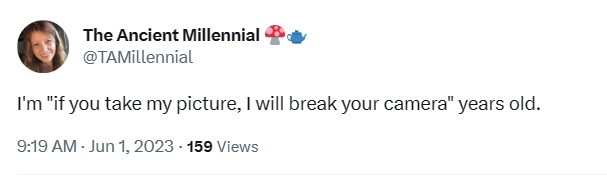
I heard the local meteorologist use this term recently, and it triggered the “where’d that come from” bone in my head. It’s an increasingly popular idiom, referring to some seemingly common piece of information that one has just learned. Its first appearance was in 2015 when a Twitter user talked about learning she was wearing the wrong size bra.
Google ngram is not tracking the use of the phrase (yet). Let me know if you have seen an increase in its usage.
It’s spelling bee time!
… and I am a horrible speller, but I do enjoy me a good story about offbeat words, like the one The New York Times ran on May 26 about words that have been in the Scripps Spelling Bee. Enjoy!
Let’s write (and that includes spelling) carefully out there, people.

 Joe Diorio Writer, editor.