Leaving a legacy … just by doing your job

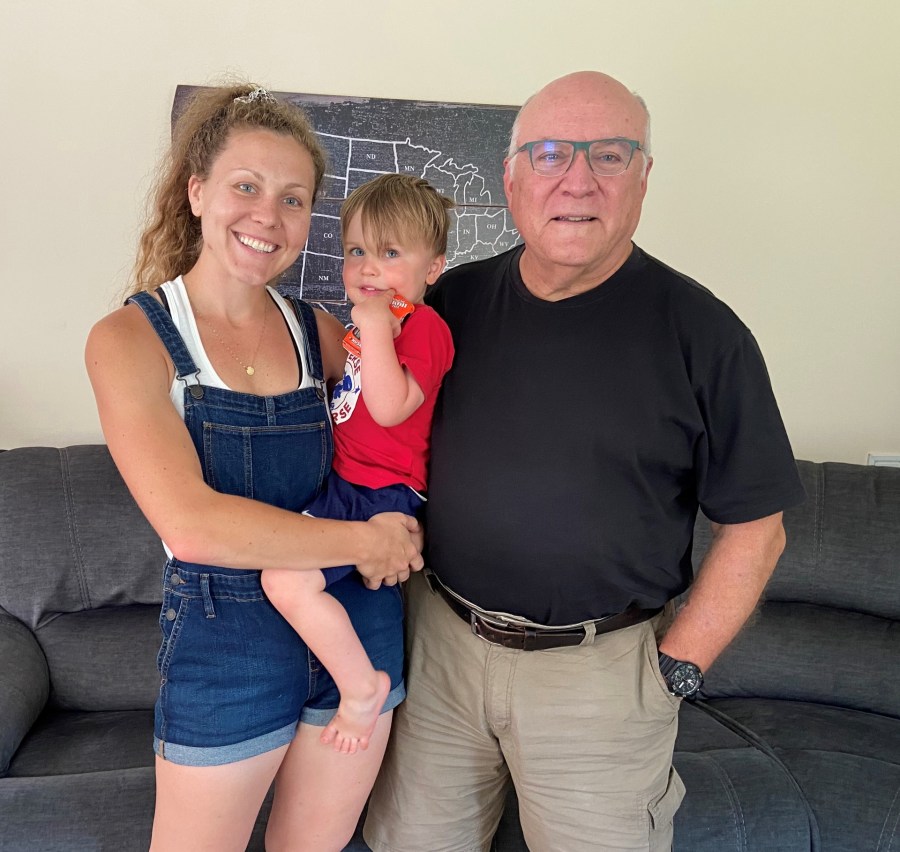
Kelly, Henry, Papa copy

From left, Kelly Porter, Henry Porter, Joe Diorio

By Joe Diorio

FATHER’S DAY 2020 – I’m Kelly’s dad and Henry’s grandfather (or “Papa,” a nickname that I am delighted to learn he prefers).

I suppose the biggest lesson I have learned is that our kids, and perhaps even our grandchildren, learn a lot more from us than we can possibly realize. Setting standards and being a good role model is something we must never lose sight of.

When I was five years old my father had a ticket to go see the 1961 World Series. Dad had never been to a World Series game, and he was really looking forward to it. That is, until he learned I needed an emergency appointment with our family doctor. He gave up his ticket in a heartbeat to be with me.

I was fine, and many years later told Dad he could have gone to the game. He just shook his head no. “Family first,” was all he would say.

Fast forward 36 years from that 1961 World Series and you find me working as a freelance writer, and the father of Kelly, who at that point was also five years old. A new and possibly lucrative client asked – demanded, actually – to meet for a late-night strategy session … beginning at 4:30 p.m. on October 31.

I turned him down. “That’s Halloween,” I said. “I’m taking my daughter trick-or-treating.”

I never heard form that client again. No loss, as far as I’m concerned. Family first.

A few months ago, I was talking to Kelly, who is now a business owner herself. Kelly referenced a conversation she just had with a mutual colleague of ours. The colleague told Kelly she stresses out every time she is about to send me an email. “Your Dad is a  stickler for grammar, I use Grammarly to double-check myself every time!” the colleague told Kelly.

“Dad, I never worry about that. I mean, I pay attention to grammar, but I don’t stress out.”

“You don’t make mistakes, either,” I told her. Kelly smiled and thanked me for setting a good example.

Set standards and live by those standards. Your work/life balance needs to be “life/work” balance. And remember that our kids hear and learn more from us than we can possibly realize.


Joe Diorio is the owner of Words by Joe Diorio, LLC and the author of A Few Words About Words, a free monthly newsletter about good writing.


Checking the mail bag

mailbag_Cropped

By Joe Diorio

Champing, chomping … just get on with it already!

A television reporter was talking about how eager restaurant owners in Nashville are to reopen after being closed due to the ongoing pandemic (And it IS still ongoing, people. Don’t get me started.) and said business owners are “chomping at the bit” to get their doors open.

I am a former horse owner (I thought I could make extra money by buying and selling them. Don’t get me started on THAT topic, either.) and believe the correct term is “champing” rather than “chomping.” To champ at something is defined in dictionary.com as to bite on a bit impatiently. A “bit” is the piece of metal inserted into a horse’s mouth, held on either end by the rein.

Was the reporter wrong? Not necessarily. The Urban Dictionary notes that “chomping at the bit” is accepted as a term for impatient and eager, like a child on Christmas morning. Therefore, if we continue to accept that language is always evolving – and we do accept that, ‘K? – then the reporter was on firm grammatical ground.

Effect or affect – haven’t we gone over this before?

During the same newscast, there was an on-screen graphic saying the pandemic was “effecting the meat industry.” Earlier in the week someone on ESPN mentioned that football free agency was effecting the National Football League in ways not seen before.

We have all been down the “effect/affect” road before, but let’s try it again. In the simplest terms, “affect” is a verb and is used to describe change. “Effect” is a noun and is used to describe the result of change.

If the pandemic is creating change to the meat industry, and said change is still in progress, then the pandemic is “affecting” the meat industry. In the same vein, NFL free agency will indeed change teams – some for the better, some for the worse – and therefore free agency is “affecting” the league. We should know by week two or three what the “effect” of said change is. And, please, nobody ask WHEN week two or three will take place, OK?

But English being English, there are exceptions where affect is a noun and effect is a verb. As in, “protestors want to effect change and reopen the country,” or when one wants to express a feeling as in, “the patient had a flat affect during their COVID-19 therapy session.”

And, yes, “affected” can be an adjective, as in, “Dr. Fauci expressed affected abstraction when describing the pandemic.” So I totally understand why there is confusion.

So many of my readers think of me as a walking grammatical encyclopedia. Trust me when I say I am not. I always look this stuff up. Therefore on this subject my counsel is to remember the affect = verb/effect = noun for most uses, and don’t be reluctant to check Google or, preferably, some other reference.

An empty crowd – period

One faithful reader noted a bottom third on network news (the bottom third is the text at the bottom of your television screen) which said there was an “empty crowd” at the Denver Zoo. That line is open for debate. A crowd can be small, thin, overflowing, rambunctious, quiet, unruly, the largest in history period, and on and on. But a crowd, by definition, cannot be empty. It is the venue where the crowd may be – the zoo, an arena, a sports stadium, the National Mall in Washington, D.C. – that can be empty.

Corrections and amplifications

Two clarifications from the May issue of this newsletter.

First, I cited the German term, “kummerspeck,” which translates to excess weight gained from emotional overeating. Turns out “Kummerspeck,” being a German noun, should be initial cap. I remember my fellow classmates at Central High School in Bridgeport, Connecticut telling me German was a tough language to learn. This underscores their sentiment.

And, by the way, I didn’t study Latin in high school, either (three years of Spanish). The word “limen” as I used it in the May issue is indeed spelled with an “e” but “liminal time” should be spelled “liminal” rather than “limenal.” Two Latin teachers caught me on that one. I blame my proofreader, who right now is probably reaching for pins for her Joe Diorio voodoo doll. Ouch!

And an offer

If you have been laid off during the pandemic, then please reach out to me. I will do all I can to leverage my contacts to help you. I also will review your resume and cover letter and offer counsel and advice. For free. We’re in this together, folks. I will not leave anyone behind.

Let’s write carefully out there, people.
Joe Diorio is a writer living in Nashville, Tennessee.

Sign up for my newsletter by texting AFEWWORDS to 22828


New words and phrases for a new challenge

A_Few_Words_About_Words_3

By Joe Diorio

Maureen Boyle, a longtime friend, college classmate, and author of the wonderful book, “Shallow Graves: The Hunt for the New Bedford Highway Serial Killer,” reports she’s discovered the word “foofaraw” and promptly posts to her social media followers that she plans to use it every day. “You have been warned,” she writes.

“Foofaraw” means a great deal of fuss given to a minor matter. Seems appropriate for a fellow wordsmith. Speaking of fuss given to seemingly minor matters, more than a few terms about the pandemic randomly used by the proletariat have come across my desk of late. Let’s delve, shall we?

A Diagnostic test is the one with the swab that goes up your nose – far enough up that you think the back of your brain is being scratched (but I digress) – and determines whether you have COVID-19. And, yes, COVID-19 should always be all uppercase because it is an abbreviation for CoronaVirusDisease 2019.

An Antibody test is the one with the blood sample to determine whether you already had COVID-19.

Ticking up or down? A reporter for a local television station, talking about the rate of positive COVID-19 tests said, “the uptick is going down.” Reporting in a pandemic does nasty stuff to good grammar practices.

Shift happens. Speaking of good grammar (or the lack thereof) the April 21 edition of The Tennessean carries a story about how Lego would start making face masks rather than plastic toy bricks. Number one: the headline said that Lego would “s__t gears” to do this. Number two: that redacted word is not “shift.” (See what I did there?)

Covidiots. I first heard this whilst watching a daytime television talk show. (Hey, there are only 52 episodes of Downton Abbey* available to stream, so gimme a break on my TV watching.) The Urban Dictionary defines a covidiot as someone who ignores the warnings of public safety, or who hoards goods … yes, like toilet paper.

Mind your gerunds. A political commentator – it doesn’t matter if the person leans red or blue – recently tweeted, “It’s time to start the reopen of America.” This individual used an infinitive (“to” plus a base verb “reopen”) when a gerund was required (verb plus “ing”). Using “reopen” would work had the pundit said, “It’s time to reopen America.” But they didn’t. So there.

House arrest? The same pundit said most of America was “under house arrest” due to social distancing. Merriam-Webster defines house arrest as being held in one’s house against their will, with a guard outside making sure no one leaves. I am staying home because, as I have said, I’m angry at this virus and want to flatten the curve. But there’s no guard outside my house. Just my neighbor’s cat, “Bingo,” who thinks he owns the street and takes umbrage with anyone who walks by. Like most people, I come and go as I please. But given the prevalence of COVID-19, I am pleased not to come and go.

English equivalent? There is a German term, kummerspeck, which translates to excess weight gained from emotional overeating. There isn’t an English equivalent, but I kind of like “grief-bacon,” signifying all the trips we’re making to the refrigerator, as an English version.

Of course, the pandemic has introduced a plethora of new terms: Zoom, N95 mask, curbside pickup/drop off, safe at home, virtual doctor visits, super spreader, flattening the curve, and more. Message me if you have more suggestions; I’d love to hear them.

Latin comes in handy sometimes. The pastor at my church – I catch his sermons via YouTube nowadays – used the term “liminal space” in a recent sermon. Liminal comes from the Latin word “limen” and means a threshold or the space between what was and what’s next. We certainly are in a liminal space as we wait out the pandemic.

Let’s write carefully out there, people.


* Which I have never watched. Sue me.


Joe Diorio is a writer living in Nashville, Tennessee.

Sign up for my newsletter by texting AFEWWORDS to 22828.


We’re hearing these terms a lot nowadays.

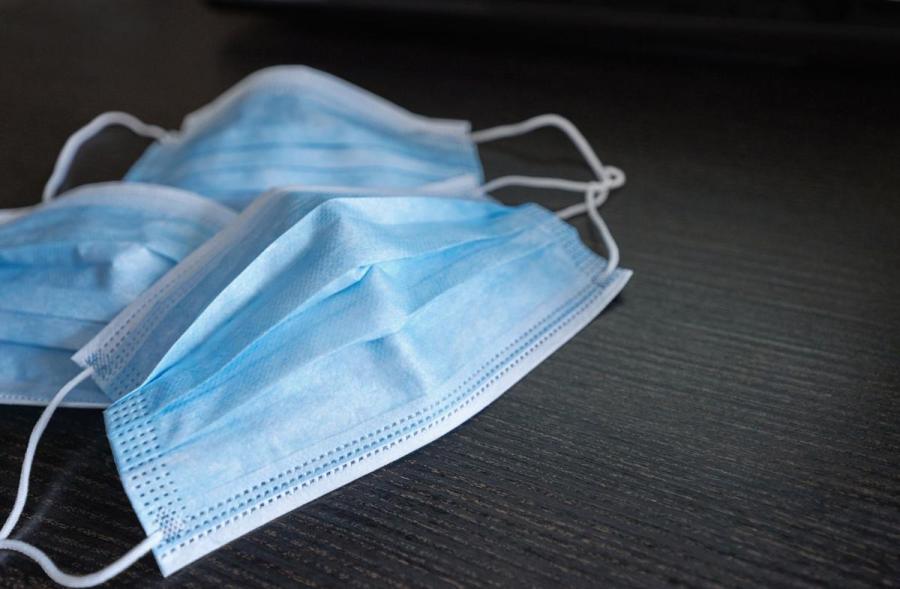
covid 19 masks

All of us are or should be hunkered down as we wait out the storm that is COVID-19. I can’t provide a cure (Or can I? More on that in a moment.), but I can continue to do what I do best in the hope that it brings a moment of intellectual distraction to readers. 

With that said, here’s a few grammatical observations on the language surrounding COVID-19.

Pandemic, which as an adjective refers to something prevalent over an entire country or the world. As a noun, pandemic is an outbreak of a pandemic disease. Of course, pandemic differs from …

Epidemic, which is an outbreak of disease that attacks many people at about the same time and may spread through one or several countries.  

Underlying health conditions, I’m not sure how often we heard this term before the pandemic, but I did a bit of digging to understand its usage. “Underlying” is the present participle of “underlie,” meaning something beneath something else. It also can refer to a steady, truss, or a way to bolster or carry. In the case of the current health crisis, the first definitions seem to work best.  

Social distancing, which Merriam-Webster says was first used in 2003, roughly coinciding with the SARS coronavirus. It is the practice of maintaining a greater than usual physical distance from other people or of avoiding direct contact with people or objects in public places during the outbreak of a contagious disease in order to minimize exposure and reduce the transmission of infection.  

Asymptomatic, which Merriam-Webster defines as presenting no symptoms of a disease. This is one of those words of efficiency. Rather than saying “He has no symptoms,” you save a couple of words by saying “He’s asymptomatic.” Then again, what are we saving those extra words for?  

Elective surgery, which refers to a surgical procedure one chooses to do and does not involve a medical emergency. Elective comes from the Latin “eligere,” meaning to choose. Types of elective surgeries can vary from cosmetic to orthopedic and more. Fifteen years ago, for example, I had surgery to repair a torn rotator cuff. As painful as my shoulder was leading up to the surgery, that was an elective procedure.  

And now a word from the editor 

I mentioned earlier that I don’t have a cure for COVID-19. That’s not entirely true. We all have the cure at our disposal. For now, that cure is social distancing. We need to do that as much as possible.  

Speaking for myself, I am practicing social distancing because I’m angry. I’m angry that people are suffering. I’m angry because I cannot visit my daughter, son-in-law, or two-year-old grandson.  

But anger isn’t necessarily a bad thing. Psychology Today says that anger can be good for us because it is a tool to protect us and our relationships, and it make us stronger in the face of adversity. How we focus and use anger is what can make it useful, and that is where a cure can come in.  

COVID-19 can be beaten with social distancing. I’m mad as hell at this disease, and I am going to use my anger to leverage the one effective weapon at my disposal – social distancing – to choke this thing off.  

Let’s all get angry. Not at a politician. Not at a grocery store for not having enough toilet paper (Where is that stuff going, anyway?). Let’s all focus anger at this disease and kick it to the curb for good.  

Get angry. And let’s write carefully out there, people. 
Joe Diorio is a writer living in Nashville, Tennessee. 

Sign up for my newsletter by texting AFEWWORDS to 22828.


In space, no one corrects your grammar

MOONRISE

By Joe Diorio

March 2020 marks the 54th anniversary of the flight of Gemini 8, the 51st anniversary of Apollo 9, and in April we mark the 50th anniversary of Apollo 13.

OK, fess up. Unless you are a science and space nerd (like me), you didn’t know any of that did you?

Quick recap for the non-nerds in the audience: Gemini 8 and Apollo 9 were test flights in preparation for the July 1969 moon landing. Apollo 13 was a disaster in deep space and was chronicled in a Tom Hanks movie. Oh and, by the way, Neil Armstrong, who was the first person to walk on the moon, was the commander of Gemini 8.

Dates in the history of space flight may sometimes get lost in history, but space terms stick around in our language. Although they are not always used correctly.

As the anniversaries of those space milestones approach, and considering that prime star gazing begins in the Spring, I touched base with Janet Ivey, President of Explore Mars and CEO of the popular “Janet’s Planet” television science segments to straighten out some space terms that are frequently misused.

Dark Side of the Moon: Besides referring to a Pink Floyd album, there is a persistent misnomer that the moon has a completely dark side. Scientists refute that, pointing out that while the moon is “tidally locked,” meaning the same side always faces the Earth, that one side isn’t dark. It is farther than the side with the Sea of Tranquility on it, fueling the urban reference that something being on the far side of the moon is really far away.

While I’m at it, calling it a “sea” is a misnomer as well, although the genesis of that name doesn’t reside in NASA’s lap. The name was coined in 1651 by Francesco Grimaldi and his bestie Giovanni Battista Riccioli as they were doing some lunar cartography.

Anyhow, Merriam-Webster defines “sea” as a great body of saltwater, and Neil Armstrong didn’t find any saltwater when he visited. Which brings me to:

Search for water: The common misconception is that scientists are looking for a place to take a quick dip. It’s a little different in space. Water as a solid, liquid, or gas is in a lot of places – the poles of Mercury, Pluto, and the clouds of Venus all have traces of frozen water. It really isn’t a search as much as it is a categorization.

Weightlessness or zero-g: Gravity doesn’t go away once you are in space. Gravity is pulling at us all the time, albeit not by very much at 17,000 miles above the Earth. Rather than being weightless, in space you are in a constant state of freefall. The proximity of the celestial body that is pulling at you determines how fast you fall.

Twinkling stars: Yeah, it sounds romantic all right, but the proper term is astronomical scintillation, referring to what we see in the night sky. The twinkling – excuse me, scintillation – is caused by the Earth’s atmosphere, which is made up of different layers that have different temperatures, densities, and other variables that cause light coming from a star to bend and refract.

Falling or shooting star: To be blunt, there ain’t no such thing. Stars burn out. Sometimes they explode. But the streaks of light we sometimes see in the night sky are caused by tiny bits of dust and rock called meteroids that are falling into Earth’s atmosphere and are burning up. If any part of a meteoroid survives the fall and lands on Earth, it is called a meteorite.

Life: Yep this one gets confused, too. All of us are conditioned to think of life as we know it. But scientists looking into space think of life in purely agnostic terms, searching for biosignatures rather than E.T. waving at us as the Hubble Telescope peers into space.

Let’s boldly go and write carefully out there, people.

Joe Diorio is a writer living in Nashville, Tennessee. He’s more than happy to bore you to death with his meager astronomical prowess.