My Blog

Stop neglecting your knowledge

A_Few_Words_About_Words_3

By Joe Diorio

A Vanderbilt University professor uses the phrase, “knowledge neglect” to explain why smart people can make mistakes over what seems like common knowledge.

Lisa Fazio, an assistant professor of psychology at Vanderbilt, shares a simple three-question quiz to make her point:

  1. How many animals did Moses take on the Ark?
  2. Which museum houses Michangelo’s portrait of the Mona Lisa?
  3. What phrase followed, “To be or not to be” in Macbeth’s soliloquy?

Fazio points out that you probably shared answers like, “two of each,” “the Louvre,” and “that is the question.” Gothcha! Noah built and piloted the Ark, Leonardo da Vinci painted the Mona Lisa, and it was Hamlet who posed the question. Fazio calls these easy to make mistakes “knowledge neglect,” whereby we have this knowledge in our heads, but we fail to use it. She postulates that this goes a long way toward explaining why so many people seem to be fooled by misleading news stories on social media.

Fazio also says repetition solidifies beliefs. In other words, if we keep saying Moses built the Ark we’ll eventually believe it. Details on her study can be found at the Vanderbilt news website.

Sound advice in the pandemic

Japan takes preventing the spread of COVID-19 seriously, even to the point of making sure no one shouts, thereby increasing the distance covered by droplet infection (yes, that is a thing). A sign at a theme park in Japan reads, “please scream inside your heart.” Show of hands, who isn’t screaming on the inside right about now?

Advertisement

LilyHansenPresentation


Because we’re too old to cry

The New Yorker magazine carried a list of new language of the pandemic in its July 20 edition. Here are a few samples:

  • Body mullet – what we wear for Zoom calls; work clothes on top, gym shorts (off camera, we hope) below.
  • Maskhole – someone wearing a mask in a way making it ineffective; below the nose or below the chin.
  • Parenting – figuring out why the PlayStation isn’t working with your WiFi.
  • COVID-30 – Two months ago this was the COVID-15, but all that sourdough bread we’re baking is having an effect.

Word of the moment – encharged

A story in late June in The New York Times noted that the U.S. Centers for Disease Control and Prevention was “encharged” with management of the novel coronavirus. Encharged is a transitive verb, meaning to give responsibility, duty, or task to someone. It’s an old term, to be sure, and I have only seen it the one time. Let me know if you have seen it anywhere else.

Second word of the moment – piffle

I stumbled across this one while scrolling through my Twitter feed. It’s a noun, first used in 1890 – although one of my proofreaders says she first heard it on Monty Python – meaning “nonsense,” as in “it’s absolute nonsense to say violence is OK.” (The word “violence” was in the dictionary definition. I’m not making a political statement here.)

Personally, I think it is piffle to use an old term like encharged to explain the CDC’s pandemic responsibilities, but that’s just me. And yes, it is correct to say “it is piffle” rather than “it is a piffle.” You wouldn’t say “it is a nonsense,” would you?

And a word about labels

If someone tells me they grew up in Chicago, I will for fun ask them if they are a Cubs or a White Sox fan. If they say Cubs, then chances are they grew up in one of the Chicago suburbs, whereas die-hard White Sox fans grew up within the Chicago city limits. Labels like that are by no means absolute – for example, I grew up 50 miles from Yankee Stadium yet I’m a Red Sox fan – but they can be an indicator.

In that spirit a study by Kathleen Hall Jamieson of the University of Pennsylvania and Dolores Albarracin from the University of Illinois suggests that in the early days of the COVID-19 pandemic Republicans tended to think the virus was a hoax, whereas Democrats felt it was real.

But as I said, labels are piffle.

Let’s write carefully out there, people.

Joe Diorio is a writer living in Nashville, Tennessee.

Sign up for his newsletter – text AFEWWORDS to 22828.

Advertisement

Barre Roots Advertisement_2


Uncomfortable conversations

A_Few_Words_About_Words_3


By Joe Diorio

Do we say Black or African American? I found a clear answer thanks to Emmanuel Acho, former National Football League player and current sports commentator for ESPN, in his video series, “Uncomfortable Conversations with a Black Man.”

The short answer is to say Black. It is most accurate and least offensive. “Not all Black people in America are African,” he explains in one video. “They can be Cuban, Jamaican, but also some Blacks choose to not identify with African because they may feel slavery stripped away that identity.”

And it is “Black,” with an uppercase “B”. The Associated Press recently changed its position on this, explaining that saying “black” (lowercase) is a color, not a person. This change comes on the heels of major news organizations changing their writing style to use uppercase Black when describing an individual.

“For this” and white allergies

In Acho’s video he discusses “white allergies,” which are proof that words can hurt. “The greatest white allergy I see is backhanded compliments,” Acho says. “[In] high school they’d say to me, ‘Acho, you don’t even talk like you are Black,’ or ‘You’re like an Oreo. Black on the outside and white on the inside,’ or ‘You don’t even dress Black.’ I realized that [they] were assuming that Black people don’t sound educated […] you are assuming something about Black people, and I contradict that assumption.”

Acho’s video series can be found on his website and YouTube. It is worth subscribing to.

Jefferson Davis and a bottle of bourbon

I admit it. I pick on television journalists a lot in this newsletter. But sometimes the material just writes itself. For instance, last month the State of Kentucky removed a statue of Jefferson Davis from the state capitol building. In doing so workers discovered the base of the statue held an old bourbon bottle with a note inside of it. The note in a bottle had been there since the statue was installed in the 1930s. One television reporter said it was “a bottle of bourbon with a note in it.” A more accurate description would have been to say an empty bourbon bottle with a note in it. I wonder if the note’s message was, “I.O.U. one full bottle of bourbon.”

Pandemic word of the moment

The Skimm reported this one: Maskne, meaning a skin condition brought on by wearing a mask.

I wish to stop here and offer an important Public Service Announcement: I am no doctor, but I am sure maskne mostly happens to healthcare workers or anyone who wears a mask for eight to 10 hours a day. It will not happen when you wear a mask just to go to the store. Wear. A. Damn. Mask.

Proofread. You never know who’s reading

“I’ve been working on my snark but I’m going to explode if I don’t say something: if you are running for office on an education platform, please learn the difference in ‘loose’ and ‘lose.’ The end.” Holly McCall, editor of the tennesseelookout.com news site, wrote this on her Twitter feed in late May. She did not identify the offending politician.

“It’s not that I’m out to shame someone,” McCall later said. “But, honestly, if you are running for office you should be held to a higher standard. It isn’t just about proofreading and checking your copy. Someone should know grammar and know the difference between loose and lose. I am not the only person who will be judging.”

For the record, according to Merriam-Webster …

Loose: not firmly or tightly fixed in place.

Lose: be deprived of or cease to have or retain (something).

You’re welcome.

Let’s write carefully out there, people.

Joe Diorio is a writer living in Nashville, Tennessee.

Sign up for my newsletter by texting AFEWWORDS to 22828.

Advertisement

Black Creative Group


The best and the brightest didn’t write the manual

STACK OF USER MANUALS

By Joe Diorio

I had to read a lot when I started my job at IBM in 1982. I was responsible for publicizing how customers in the Southeastern U.S. used IBM products, but first I had to get up-to-speed on computers and computer-industry news. Yes, I said “computers.” This was the early 80s and the word “laptop” had not been coined. No one called them PCs and virtually no one was using the internet.

So, I read news magazines, The New York Times, The Wall Street Journal, Computer Week and dozens of other trade magazines.

I also read IBM user manuals about products called the System/360 mainframe, the System/36 mid-size computer, and this quirky product no one at IBM wanted to sell called the IBM Personal Computer. I would spend days reading user manuals. When I finished I had the following revelation: I didn’t know anything more about IBM computers than I did before I started.

Each book began with the following line (these aren’t the exact words, but they’re close): “Before reading this manual, refer to technical journal XXXXXXXX.” And once I found this missing manual, IT told me to find yet another manual for further reference.

I never found “manual zero,” but I did learn why IBM user manuals were so poorly written.

Back in the 1980s IBM didn’t fire people. “Full employment” was the company line. If you were hired by IBM, then you had a job for life.

But what if you were bad at your job? No problem. IBM’s human resources folks would have you reassigned to a different job. And if you were bad at that new job, you would be reassigned yet again. This process would continue indefinitely.

Well, almost indefinitely. Eventually more than a few employees were found to be so bad at everything that the folks in human resources were left flummoxed as to where to assign them. Were those bad employees fired?

Nope. They were given the task of writing user manuals.

That’s right. The least talented people – the ones who couldn’t do any other job well – were responsible for writing user manuals explaining how to use IBM products.

I often wondered who would use IBM user manuals and I think the answer is virtually no one. Not even people who work for IBM.

I say that because by 1991 I had left IBM and was starting work as a freelance writer. My wife still worked for IBM; she was a Systems Engineer responsible for helping customers set up their computers. We used her employee discount to buy an IBM Personal Computer for my business. When the PC arrived, she ripped open the box and started setting up the PC. Yes, you had to set up a new PC; load software, plug the monitor in to the processor, and so on. Bear in mind, however, that my wife had never set up a PC before. Remember I said IBM sales professionals didn’t like selling PCs. The commissions were too small.

In setting up the PC she had tossed aside the manual. I picked it up, held it out toward her and said, “Don’t you want to look at this?”

She stopped long enough to look at what I was holding and said, “Oh, screw that!”

Let’s write carefully out there, people.


Leaving a legacy … just by doing your job

Kelly, Henry, Papa copy

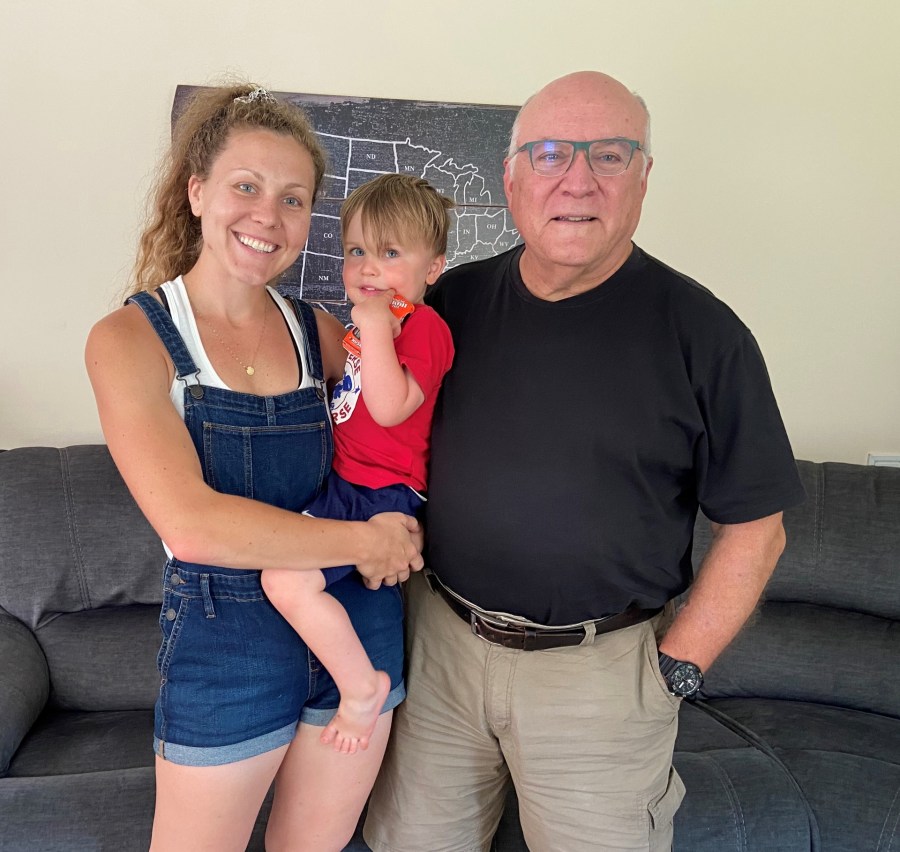
From left, Kelly Porter, Henry Porter, Joe Diorio

By Joe Diorio

FATHER’S DAY 2020 – I’m Kelly’s dad and Henry’s grandfather (or “Papa,” a nickname that I am delighted to learn he prefers).

I suppose the biggest lesson I have learned is that our kids, and perhaps even our grandchildren, learn a lot more from us than we can possibly realize. Setting standards and being a good role model is something we must never lose sight of.

When I was five years old my father had a ticket to go see the 1961 World Series. Dad had never been to a World Series game, and he was really looking forward to it. That is, until he learned I needed an emergency appointment with our family doctor. He gave up his ticket in a heartbeat to be with me.

I was fine, and many years later told Dad he could have gone to the game. He just shook his head no. “Family first,” was all he would say.

Fast forward 36 years from that 1961 World Series and you find me working as a freelance writer, and the father of Kelly, who at that point was also five years old. A new and possibly lucrative client asked – demanded, actually – to meet for a late-night strategy session … beginning at 4:30 p.m. on October 31.

I turned him down. “That’s Halloween,” I said. “I’m taking my daughter trick-or-treating.”

I never heard form that client again. No loss, as far as I’m concerned. Family first.

A few months ago, I was talking to Kelly, who is now a business owner herself. Kelly referenced a conversation she just had with a mutual colleague of ours. The colleague told Kelly she stresses out every time she is about to send me an email. “Your Dad is a  stickler for grammar, I use Grammarly to double-check myself every time!” the colleague told Kelly.

“Dad, I never worry about that. I mean, I pay attention to grammar, but I don’t stress out.”

“You don’t make mistakes, either,” I told her. Kelly smiled and thanked me for setting a good example.

Set standards and live by those standards. Your work/life balance needs to be “life/work” balance. And remember that our kids hear and learn more from us than we can possibly realize.


Joe Diorio is the owner of Words by Joe Diorio, LLC and the author of A Few Words About Words, a free monthly newsletter about good writing.


Checking the mail bag

mailbag_Cropped

By Joe Diorio

Champing, chomping … just get on with it already!

A television reporter was talking about how eager restaurant owners in Nashville are to reopen after being closed due to the ongoing pandemic (And it IS still ongoing, people. Don’t get me started.) and said business owners are “chomping at the bit” to get their doors open.

I am a former horse owner (I thought I could make extra money by buying and selling them. Don’t get me started on THAT topic, either.) and believe the correct term is “champing” rather than “chomping.” To champ at something is defined in dictionary.com as to bite on a bit impatiently. A “bit” is the piece of metal inserted into a horse’s mouth, held on either end by the rein.

Was the reporter wrong? Not necessarily. The Urban Dictionary notes that “chomping at the bit” is accepted as a term for impatient and eager, like a child on Christmas morning. Therefore, if we continue to accept that language is always evolving – and we do accept that, ‘K? – then the reporter was on firm grammatical ground.

Effect or affect – haven’t we gone over this before?

During the same newscast, there was an on-screen graphic saying the pandemic was “effecting the meat industry.” Earlier in the week someone on ESPN mentioned that football free agency was effecting the National Football League in ways not seen before.

We have all been down the “effect/affect” road before, but let’s try it again. In the simplest terms, “affect” is a verb and is used to describe change. “Effect” is a noun and is used to describe the result of change.

If the pandemic is creating change to the meat industry, and said change is still in progress, then the pandemic is “affecting” the meat industry. In the same vein, NFL free agency will indeed change teams – some for the better, some for the worse – and therefore free agency is “affecting” the league. We should know by week two or three what the “effect” of said change is. And, please, nobody ask WHEN week two or three will take place, OK?

But English being English, there are exceptions where affect is a noun and effect is a verb. As in, “protestors want to effect change and reopen the country,” or when one wants to express a feeling as in, “the patient had a flat affect during their COVID-19 therapy session.”

And, yes, “affected” can be an adjective, as in, “Dr. Fauci expressed affected abstraction when describing the pandemic.” So I totally understand why there is confusion.

So many of my readers think of me as a walking grammatical encyclopedia. Trust me when I say I am not. I always look this stuff up. Therefore on this subject my counsel is to remember the affect = verb/effect = noun for most uses, and don’t be reluctant to check Google or, preferably, some other reference.

An empty crowd – period

One faithful reader noted a bottom third on network news (the bottom third is the text at the bottom of your television screen) which said there was an “empty crowd” at the Denver Zoo. That line is open for debate. A crowd can be small, thin, overflowing, rambunctious, quiet, unruly, the largest in history period, and on and on. But a crowd, by definition, cannot be empty. It is the venue where the crowd may be – the zoo, an arena, a sports stadium, the National Mall in Washington, D.C. – that can be empty.

Corrections and amplifications

Two clarifications from the May issue of this newsletter.

First, I cited the German term, “kummerspeck,” which translates to excess weight gained from emotional overeating. Turns out “Kummerspeck,” being a German noun, should be initial cap. I remember my fellow classmates at Central High School in Bridgeport, Connecticut telling me German was a tough language to learn. This underscores their sentiment.

And, by the way, I didn’t study Latin in high school, either (three years of Spanish). The word “limen” as I used it in the May issue is indeed spelled with an “e” but “liminal time” should be spelled “liminal” rather than “limenal.” Two Latin teachers caught me on that one. I blame my proofreader, who right now is probably reaching for pins for her Joe Diorio voodoo doll. Ouch!

And an offer

If you have been laid off during the pandemic, then please reach out to me. I will do all I can to leverage my contacts to help you. I also will review your resume and cover letter and offer counsel and advice. For free. We’re in this together, folks. I will not leave anyone behind.

Let’s write carefully out there, people.

Joe Diorio is a writer living in Nashville, Tennessee.

Sign up for my newsletter by texting AFEWWORDS to 22828