Independence day smorgasbord


July Artwork 2

Above left: Operation Overlord. Above right: An overloaded truck. (I’ll explain later. I promise.)

By Joe Diorio

As America celebrates the 243rd anniversary of its independence (“Happy Treason Day, colonists” as they jokingly say in the U.K.), I’m reminded of a brilliant piece of writing by none other than Dr. Benjamin Franklin.

The framers of the Constitution were squabbling over how best to decide who gets to vote in a popular election. One side argued that only men who owned property should vote. Franklin’s side opposed this and offered a lengthy and verbose explanation supporting their argument. I’m afraid our over reliance on Google searches and consequent short attention span prevents me from sharing their long-winded argument. Instead, here is Dr. Franklin’s brilliant summation of why property ownership should not determine who gets to vote.

To require property of voters leads us to this dilemma: I own a jackass; I can vote. The jackass dies; I cannot vote. Therefore, the vote represents not me but the jackass.*

Brevity is beautiful, isn’t it?

* That may be a shorter version of his actual quote. Go easy on me.

The votes are in, y’all

“Y’all” is either plural or both singular and plural, so says the readers of this newsletter. And it ain’t singular, y’hear?

Last month I polled readers asking if “y’all” is singular or plural, and whether it’s OK to use the word if you live north of the Mason-Dixon Line. Respondents weren’t shy in offering an opinion.

52% said it is plural, and 42% said both. Only 6% said singular. “Y’all can be singular or plural,” one respondent wrote. “’All, y’all’ is always plural.”

Also, 59% of the respondents said it’s OK to use “y’all” if you live up north. “It should not be used by conscious decision,” one reader said. “Rather unconsciously as a result of being submerged in the Southern culture for a period of time that results in an unconscious use of the term. For me, it took about 20 years.”

Anybody up for a survey about “ya’s” (singular) and “youse” (plural)?

Dial pound … wait what?

A national litigation law firm uses the following phrase in its advertising: “Dial pound (number), that’s all.”

Who dials a number anymore? And how the heck can you dial the pound sign? AND will anyone know what you are talking about when you use said terminology?

“If you ask a millennial then for sure it’s outdated. Ask someone my age and they’d know exactly what you mean,” says Linda Barlow, a freelance writer in Bucks County, Pennsylvania. She points out that, for millennials, it’s not a pound sign but a hashtag. And neither can be found on the dial of a rotary phone.

Barlow does a lot of work for Comcast, so writing “dial a number” is definitely verboten. “Perhaps younger people just aren’t [this law firm’s] target market,” she says.

“I think there are phrases that have entered colloquial speech that we don’t necessarily have to know the original meaning to know the intent,” says Char Vandermeer, a freelance writer in Nashville. She points out that “drop a dime” is an example of an obsolete phone-related phrase that (quite likely) only devoted readers of noir literature would understand.

“Plus ‘drop a dime’ is a wonderfully loaded expression,” she says. “It’s more than simply making a call; specifically it refers to the act of calling the police or someone in power to rat someone out.”

Notice that I did not mention the law firm by name. I’m not “diming” them.

Facts matter, so we need to get them right

Last month marked the 75th Anniversary of D-Day, the allied invasion of Nazi occupied France. While reporting the anniversary, a young television news anchor in Nashville referred to the event as “Operation Overload.”

She was soooo close to being right. The correct name was “Operation Overlord,” which was the code name for the battle of Normandy. The amphibious operation to bring the 150,000-plus troops ashore to fight said battle was code named “Operation Neptune.” Together, they took place on D-Day, June 6, 1944.

If you are rolling your eyes after reading the above paragraphs, then please stop. These facts matter. Presenting readers or listeners with precise and careful erudition is the crux of good writing. Getting even small details wrong leads to accusations of fake news or worse. That’s why I always conclude every issue of this newsletter with the same admonition:

Let’s write carefully out there, people.

Joe Diorio is a writer living in Nashville. He wouldn’t mind if you told your friends and colleagues about him.

#SayTheWord, already!

say-the-wordBy Joe Diorio

I am, as I am sure we all are, familiar with the subject of political correctness, or P.C. I’m not an expert, but I am familiar. 

For example, someone isn’t short, so goes the joke, they are “vertically challenged.” I am bald, but the P.C. police prefer I say that I use more toothpaste than shampoo. (OK, I made that one up, but I AM bald, or hair follicle challenged.)

Some commonly used P.C. terms include visually impaired (“blind” is only used when the individual cannot see anything), hard of hearing (similarly, “deaf” is only used when the individual cannot hear anything), intellectually disabled, and “handi-capable” for someone who is physically impaired.

Do these terms go too far? A group of researchers think so.

An article in Rehabilitation Psychology, a journal of the American Psychological Association, argues that “disability” isn’t a dirty word and is perfectly fine to use in place of clunky terminology like “handi-capable,” “differently-abled,” and even “physically challenged.” Not using the word “disability” can have unintended and adverse consequences.

“Decisions about language have important sociocultural meanings in the disability community, and erasure of the term ‘disability’ can evoke fear and frustration among those who claim a disabled identity and align with disability culture,” the authors say. 

“Having a disability is not something to be ashamed of,” says Anjali Forber-Pratt, Ph.D., a professor at Vanderbilt University’s Peabody College and one of the six authors of the article. Forber-Pratt and her co-authors all identify as disabled female scholars and psychologists. Forber-Pratt is a former Paralympian and studies identity development at Vanderbilt. The authors are promoting a #SaytheWord social media movement in order to embrace disability identity. 

“The field of psychology has a rich tradition of appreciation of cultural diversity and individual difference,” Forber-Pratt says. “Yet, disability has largely been left out of these efforts. The disability movement is moving toward the status of a diverse cultural group with a social justice agenda parallel to those of other marginalized communities.”

The article promotes use of the social media hashtag #SaytheWord to encourage everyone to be comfortable using the term disability, and the hashtag has started a conversation. “I prefer ‘disability’ to ‘unique challenges’ or ‘special needs’ or ‘extraordinary.’ Disability isn’t special. It’s normal,” one person wrote on Twitter. “DISABILITY is not a dirty word!! ‘Access Inclusion Seeker’ is just offensive,” said another person.

By the way, recently Major League Baseball has ceased referring to a list of players injured and unable to play as the “Disabled List” and instead calls it the “Injured List.” I’m all for baseball standing up to #SaytheWord.

Y’all gotta read this

Frequently when I am engaged in conversation here in Nashville someone will stop me and say “Y’all aren’t from around here, are ya?” I grew up in Connecticut, just 50 miles from Manhattan, and apparently my combination of a New Yorker/New Englander accent hasn’t vanished.

In the situation I just mentioned the word “y’all” is being used as a singular pronoun, and there is a share of disagreement as to whether “y’all” is singular or plural. I’m currently reading Dreyer’s English by Benjamin Dreyer, copy chief for Random House publisher, and while he won’t touch the singular/plural argument he argues that non-southerners should never use the term. I did, briefly, after moving here in 2015 but stopped because it didn’t feel right. 

Two questions for you, dear readers. Is “y’all” singular or plural? And is it OK for someone living north of the Mason-Dixon line to use the term? Here’s a survey; let me know what you think.

Let’s write carefully out there, y’all.

To rule, or not to rule

MayArtwork

By Joe Diorio

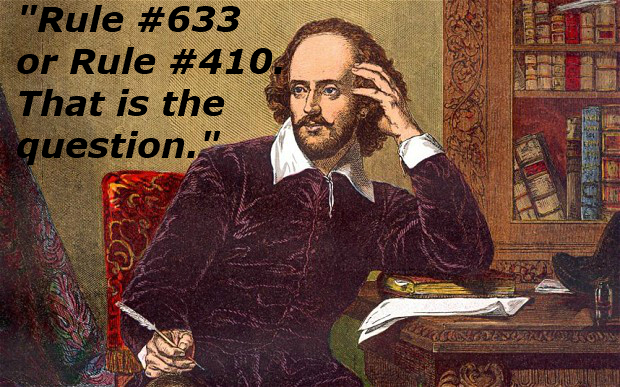
Mark Edwards has a long list of writing tips, and there is a tinge of irony to them. 

“Rule #683: Don’t ever write it down – plot, story, sentence – unless it’s PERFECT IN YOUR MIND.” 

“Rule #677: Your first draft is FANTASTIC. Don’t let anyone tell you otherwise.” 

“Rule #676: Each day open the thesaurus and find cool new words – and just jam them into whatever you’re working on.” 

OK, so his advice is loaded with irony. Edwards is a communications and media studies adjunct instructor at Sacred Heart University in Fairfield, Conn., and he’s encountered his share of would be Hemingways. His writing tips appear on his Facebook page. 

His advice is a stress relief tool and a reminder to remain vigilant when writing something you want someone else to read. Edwards recalls a lesson from one of his MFA instructors, poet Wayne Brown. “He was very no-nonsense. He upset someone in a workshop when he said, ‘this is beautifully written, but who outside of your family would want to read this?’” 

He shares a personal story when a writer he considered a mentor sat him down and said, “All right, you are good enough where I can tell you how bad your writing is without making you stop writing.” Harsh? Perhaps. But sometimes harsh is necessary. 

“There’s a kind of narcissism that ties into people’s writing where it’s all about them rather than, God forbid, writing three sentences in a row that are compelling,” Edwards says. 

Are there over 600 writing tips that Edwards has written down somewhere? “In my mind, perhaps yes.” Part of it, Edwards explains, is the nature of the internet. “You always feel you are suddenly coming in on the middle of an ongoing thing. I have no objection to faking that.”  

I have waited with baited (bated?) breath to tell you this 

April 23rd marked the 454th birthday of William Shakespeare, the man who first committed to paper many of the phrases and words we use today. Jen Horner, marketing manager for MTM LinguaSoft, wrote about the evolution of phrases and terms of Shakespearian lore.  

For example, in The Merchant of Venice, Shylock asks whether his customers should expect him to speak “with bated breath and whisp’ring humbleness.” Notice it is “bated” rather than “baited.”  

“Bate,” Horner explains, comes from “abate” or “abatre” in old French, which means to beat down or diminish. Shylock, in this passage, is asking if he should stifle himself and speak in a hushed tone.  

“Nowadays we don’t speak with bated breath – we wait with bated breath,” Horner writes. “What’s more, lots of us wait with “baited” breath. I suppose we are hoping the bait on our breath will attract the thing we want, like the cat who eats cheese then waits by the mouse-hole.”  

From the mail bag 

Several readers asked me to explain the difference between affect and effect. Rather than me speaking from the authoritative podium, I’ll turn to a colleague, Tim Fallis, an assistant professor at Hawai’i Pacific University, who addresses that head on in a writing class for his students.  

In a detailed PowerPoint presentation, Fallis explains that affect the verb means to impact or change. Affect the noun refers to someone’s disposition as reflected in their expression or posture. Conversely, effect the verb is to bring about or make happen, and effect the noun is the result of a change. He also notes that affect the noun and effect the verb are rarely used. 

“English is a polyglot, messy, terrible language,” he tells his students. “Get over your disappointment and learn how to deal with it!” 

Details matter 

The fire at the Cathedral of Notre Dame in Paris had many news organizations referring to Paris as the “City of Lights.” Not quite. Paris is the “City of Light” (singular) because in the 18th century it was considered a place of enlightenment; the city was a hub of education philosophy, and learning. It also was one of the first major cities to utilize gas lights to illuminate the streets.

A small detail, perhaps, but part of Fallis’ presentation explains why someone should care about small details. “You don’t want to come off as an uneducated buffoon. You do want to impress your reader with your precise and careful erudition. You do want to communicate with absolute clarity; otherwise, you’re wasting your time and your readers’.” 

And as Mark Edwards points out, you want to write something that more than your family wants to read. 

Let’s write carefully out there, people.
Joe Diorio is a writer living in Nashville, Tennessee. He wouldn’t mind if you told your friends and colleagues about him.

I realize this is a new word

April Artwork3


By Joe Diorio

My 2018 Toyota Camry probably has more pickup than the 1967 Shelby Cobra I drove as a young man.* The national speed limit was 55 miles per hour back then. It’s up to 70 now in most places, indicating that limits are being extended.

I’ll let sociologists and urban studies experts decide if there’s a connection between increased horsepower and speed limits. My point (and I do have one, as goes the title of a great book by Ellen DeGeneres) is that rules can change as things evolve.  

Our language is a great example of rules changing. At one time the grammar police (“to serve and correct” is their motto) would cite the errant writer who verbs too many nouns. Take “weaponize” for example. Really, please take it. 

The article “ize” is a verb-forming suffix that comes from words that entered the language from Latin or French, like baptize, or barbarize. It is added to adjectives and nouns to form transitive verbs with the general senses “to render” or “make” and it converts or gives a specified character or form to something.  

The “ize” extension is getting a boost from the Tennessee Department of Transportation (TDOT) as it rebuilds Interstate 440, a partial beltway surrounding Nashville. The concrete and pothole-festooned surface of the highway must first be removed. To do this, TDOT is using a huge machine, the “Badger Breaker,” to break up the concrete surface of the highway and use the remaining rubble as the base of the new highway.          

In a recent television interview, Kathryn Schulte, community relations officer for TDOT, referred to this process as rubblization. This essentially “nouns” a verb that had once been a noun. And if you think that sentence is confusing, try driving on 440 during rush hour nowadays … an endeavor TDOT suggests we avoid, just as I plead for the avoidance of “weaponize,” but I’m digressing again. 

TDOT admits that rubblization as well as its friends “rubblize,” “rubblized,” and “rubblizing” are absent from the dictionary, but rightfully (yes, rightfully) stands by its usage.  

“I think there is a gray area somewhere in the rubble of our 440 project (see what I did there?),” says TDOT’s Heather Jensen. She and Schulte point out that the term is germane to highway construction. Having worked in high tech for many years – where IBM would refer to overhead projector transparencies as “foils” – I concede there are words that are unique to the industry one works in. I’d say we shouldn’t weaponize our disparagement of new words.

Let’s write carefully out there, people.

Joseph Diorio

* Full disclosure: I drove it when my sister – the Cobra’s rightful owner – let me borrow the keys.

Joe Diorio is a writer living in Nashville, Tennessee. You should tell your friends and colleagues about him.

Kicking our apologies up a notch

Homers Apology

By Joe Diorio

“Joseph, you apologize to Thomas like you mean it.” It’s an admonishment I vividly recall some 50-plus years after my fourth-grade teacher directed me to express my regrets for punching a classmate. I had already muttered “I’m sorry,” but that wasn’t cutting it with Mrs. Barachini. I dug an adverb out of my vocabulary, saying “I’m REALLY sorry, Thomas” to get me out of a one-way ticket to the principal’s office. 

(Post script – I wasn’t sorry. Thomas was a jerk and deserved that knuckle sandwich.) 

My post script is the rub – “rub” being a phrase first used by Shakespeare in Hamlet, but there I go digressing again. My point is that a stack of adjectives or adverbs are often used to strengthen the sincerity of an apology.  

Consider that within the past month several public officials were caught with their hands in the racist action cookie jar – see Ralph Northam and Bill Lee for details, maybe with a side of Mark Herring – and all cracked open the nearest thesaurus to make sure everyone knows they’re really, really sorry. Northam said he is “deeply sorry.” Herring used a double-deeply for his mea culpa, while Lee said he has come to regret his actions. 

Using an adjective to modify a noun is a grammatical practice that has roots in Latin; it is an adjectīvum or additional noun. The use of said modifiers by politicians and one hot-headed fourth grader is described as predictive usage, in that they modify and – basically – strengthen the noun. The use of the double adverb by Herring may have changed the second “deeply” into an adjective, but let’s not go down that rabbit hole (Lewis Carroll, Alice in Wonderland. Stop Googling it.). An adverb’s function is to limit or extend the significance of a verb. Its Latin roots come from adverbium, literally “that which is added to a verb.” 

How effective adverbs and adjectives are at enhancing the sincerity of one’s regret is left to the recipient of the act. Mrs. Barachini believed me. Thomas, meanwhile, punched me in the back of the head the next day when no one was looking. 

Let’s write carefully out there, people. 

Joe Diorio is a writer living in Nashville, Tennessee. You should tell your friends and colleagues about him